Full Body Workout Plan for Weight Loss: 3 Days a Week
A 12-week full body workout plan for weight loss: 3 strength days, brisk walks in between, home or gym options, and the results trials actually observed.
PushSlayer Editorial Team · Updated · 5 min read
Leer en español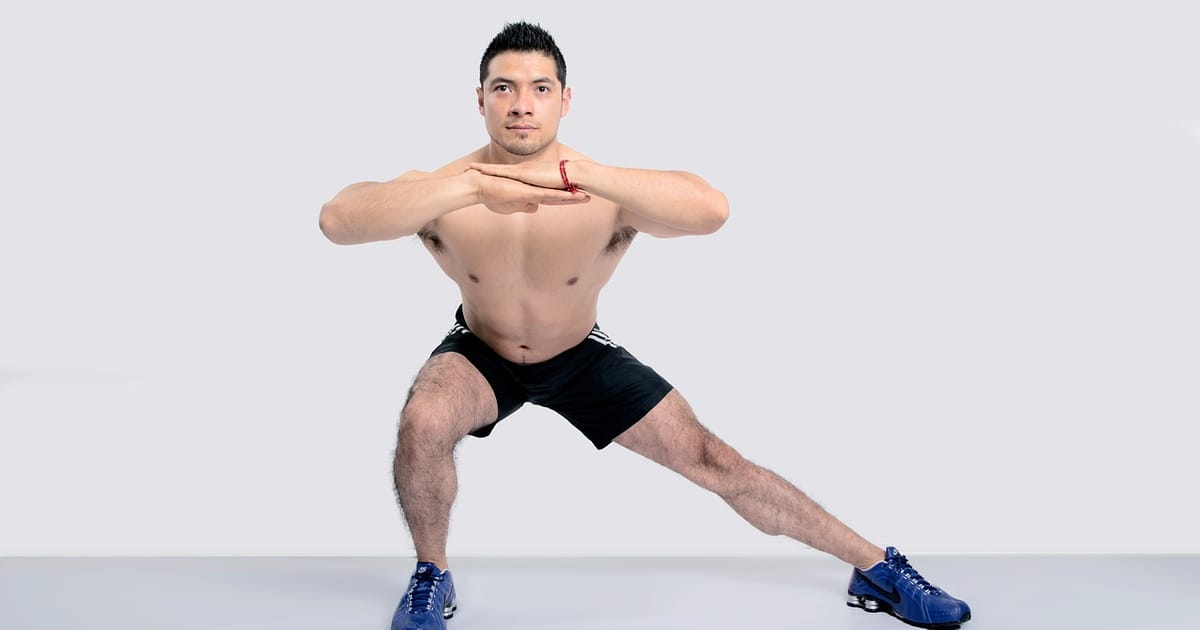
A full body workout plan for weight loss works best as two parts: a full-body strength session 3 non-consecutive days a week, and brisk walks on most other days that build toward 150-300 minutes a week. The strength days protect and build muscle. The aerobic part, the walking, does more of the work on body weight. In an 8-month trial with jogging-level cardio, people who combined both lost about 5 lb (2.4 kg) of fat on average and gained lean mass.
The weekly schedule
This full body workout routine trains strength on Monday, Wednesday and Friday, with walks on Tuesday, Thursday and Saturday and rest on Sunday. Any three non-consecutive days work.
| Day | Session | Time |
|---|---|---|
| Monday | Full body strength | 35-45 min |
| Tuesday | Brisk walk | See the 12-week ramp |
| Wednesday | Full body strength | 35-45 min |
| Thursday | Brisk walk | See the 12-week ramp |
| Friday | Full body strength | 35-45 min |
| Saturday | Brisk walk | See the 12-week ramp |
| Sunday | Rest or an easy walk | Optional |
The schedule follows two guidelines. The WHO 2020 guidelines ask adults for 150-300 minutes of moderate aerobic activity a week, plus muscle-strengthening work for all major muscle groups on 2 or more days. The ACSM position stand on progression recommends 2-3 strength days a week for beginners, with loads you can lift for 8-12 reps. Brisk means a pace where, in the CDC's talk test, you can talk but not sing. The guide to brisk walking for weight loss shows how to check your pace with a step count.
The full body workout
Warm up with 5 minutes of easy walking and a light first set. Then do the six exercises below in order, 3 sets of 8-12 reps each (the plank is held instead). The exercise choice and plank times are coaching choices that cover the major muscle groups the WHO asks you to train. Pick the version where the last 2 reps of a set feel hard but your form holds.
| Movement | At home | At the gym |
|---|---|---|
| Squat | Bodyweight squat, then holding a filled backpack | Goblet squat with a dumbbell |
| Push-up | Incline push-up on a counter or table, then the floor | Floor push-up or dumbbell bench press |
| Hip hinge | Glute bridge, then a Romanian deadlift holding a backpack | Dumbbell Romanian deadlift |
| Row | One-arm row with a backpack or water jug | One-arm dumbbell row or cable row |
| Split squat | Bodyweight split squat, hands on a wall for balance | Dumbbell split squat |
| Plank | 3 holds of 20-40 seconds | Same |
Rest 60-90 seconds between sets. That is a coaching choice to keep the session under 45 minutes, not a number from a study.
Move up when you get 12 clean reps on all your sets in two sessions in a row. That is the rule the STRRIDE trial used, adding 5 lb (2.3 kg) each time. Add load (a heavier backpack or dumbbell), switch to a harder version, or for push-ups, lower the surface. The guide on incline push-ups shows which height to start from, and how to increase push-ups covers the step after that.
A 12-week ramp
Start smaller than the full plan. In the STRRIDE trial described below, strength groups did 1 set per exercise in weeks 1-2, 2 sets in weeks 3-4, then 3 sets, and aerobic time increased gradually over the first 8-10 weeks. This plan copies that ramp. The walking minutes are a coaching plan aimed at the WHO range, not a protocol from one study.
| Weeks | Strength sets per exercise | Brisk walking per week |
|---|---|---|
| 1-2 | 1 | 3 walks of 20 min (60 min) |
| 3-4 | 2 | 3 walks of 30 min (90 min) |
| 5-6 | 3 | 3 walks of 40 min (120 min) |
| 7-8 | 3 | 3 walks of 50 min (150 min) |
| 9-10 | 3 | 4 walks of 50 min (200 min) |
| 11-12 | 3 | 5 walks of 50 min (250 min) |
From week 9 you need a walk on a strength day or on Sunday. A walk after a strength session works fine. If a week goes badly, repeat it instead of skipping ahead.
How much weight can you lose with this plan?
Without dieting, the combined group in the STRRIDE trial lost about 3.6 lb (1.6 kg) over 8 months on average, and its body composition changed more than its weight. The ACSM position stand on weight loss found that 150-250 minutes a week of moderate activity produces only modest weight loss, while more than 250 minutes a week has been linked to clinically significant loss. Activity in the 150-250 range improved weight loss in studies that also used a moderate diet.
The STRRIDE AT/RT trial shows what that looks like. It followed 119 sedentary adults with overweight or obesity who completed 8 months of strength training, aerobic training, or both, and their reported food intake did not change. The combined group lost 3.6 lb (1.63 kg) of body weight, 5.4 lb (2.44 kg) of fat, and gained 1.8 lb (0.81 kg) of lean mass. Those are group averages; individual results varied widely.
Read those numbers with two caveats. The aerobic part was harder than walking, about the energy of jogging 12 miles (19 km) a week at 65-80% of peak aerobic capacity (VO2 peak). And nobody in the study was dieting. If your goal is more than a few pounds, what you eat matters more than any change to this plan. Sleep matters too, for what kind of weight you lose: see what short sleep does to muscle while you diet.
Is strength training or cardio better for weight loss?
Cardio moves the scale more, strength training changes what the weight is made of, and doing both gave the best body composition in STRRIDE.
| Group (8 months) | Body weight | Fat mass | Lean mass | Body fat % |
|---|---|---|---|---|
| Strength only | +1.8 lb (0.83 kg) | -0.6 lb (0.26 kg), not significant | +2.4 lb (1.09 kg) | -0.65 points |
| Aerobic only | -3.9 lb (1.76 kg) | -3.7 lb (1.66 kg) | -0.2 lb (0.10 kg), not significant | -1.01 points |
| Both | -3.6 lb (1.63 kg) | -5.4 lb (2.44 kg) | +1.8 lb (0.81 kg) | -2.04 points |
The strength-only group gained weight, mostly as muscle. Strength training still reduces fat on its own: a 2022 meta-analysis of randomized trials in healthy adults found that full-body resistance training lowered body fat by 1.46 percentage points and fat mass by 1.2 lb (0.55 kg) on average, compared with no exercise, and reduced visceral fat. The ACSM sums it up the same way: resistance training does not add to weight loss, but it may increase lean mass and fat loss.
That is why this plan keeps the strength days even though aerobic work moved the scale more in STRRIDE. Doing both did take twice the time in the trial. If you only have time for one, the trial favors aerobic work for weight, and strength work for muscle.
Can you lose weight with bodyweight exercises at home?
Yes, when you pair them with the walking. Hard bodyweight sets do the strength job that gym weights do, and the walking does most of the work on the scale. Bodyweight work counts as resistance training when the last reps of each set are a struggle. In a small 2017 randomized trial, 18 young men did either bench presses or push-ups adjusted to the same load for 8 weeks, and both groups gained similar strength and chest and triceps muscle thickness.
At home, the limit is load, not the movement. Once 12 bodyweight squats feel easy, add a backpack with books, slow the lowering phase to 3 seconds, or move to split squats. The beginner bodyweight workout program lays out a harder version of each movement, step by step. The walking half of the plan needs no equipment at all.
How many days a week should you do full body workouts?
Three is the most a beginner needs, and two still meets the guidelines. The ACSM recommends 2-3 days a week for novices, and the WHO asks for 2 or more. Leaving a day between sessions, so the same muscles are not trained two days in a row, is a coaching choice.
If you can only train twice, keep the strength days and add a walk to each one.
Before you start
Start at the level you can repeat next week, not the hardest one you can survive today. If a movement causes joint pain rather than muscle effort, stop that exercise, and if the pain does not settle after a few days of rest, see a doctor or physiotherapist. If you have a heart condition, diabetes, a joint injury, or you are pregnant, see a doctor or physiotherapist before you begin.