
Stretches for Tight Quads: 5 Moves and a 6-Week Plan
Stretches for tight quads: 5 moves, why hip position matters, how hard and long to hold, a 1-minute self-check and a 6-week plan with squats.
PushSlayer Editorial Team · Updated · 7 min read
Leer en español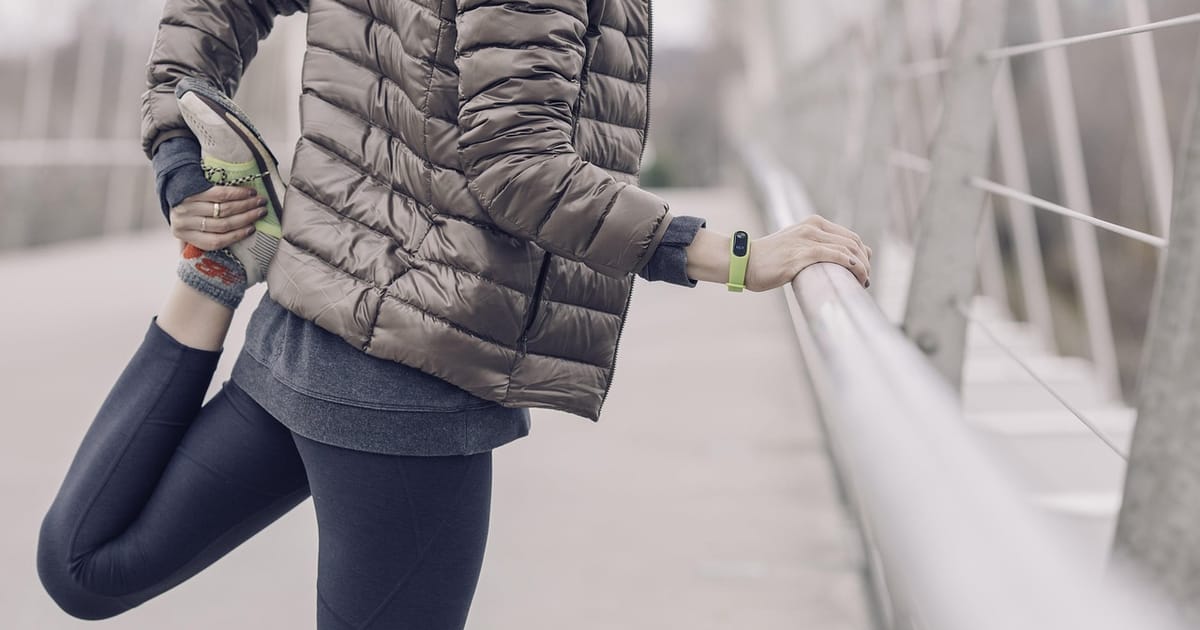
The best stretches for tight quads bend your knee fully while your hip stays straight or moves slightly behind you: the standing quad stretch, the prone quad stretch, the side-lying quad stretch, the kneeling quad stretch and the couch stretch. Hold each one for 30 seconds, twice per side, on 5 days a week, at a pull just short of discomfort. In a small 2024 study, 15 men who did five 1-minute holds of the standing version, 5 days a week, gained about 15 degrees of knee bend in 4 weeks.
The 5 best stretches for tight quads
The quadriceps are four muscles. Three of them (the vasti) cross only the knee, so any full knee bend stretches them. The fourth, the rectus femoris, also crosses the hip, so it only gets a full stretch when you bend the knee and keep the thigh in line with your body or slightly behind it. That is why a tucked pelvis matters in every move below.
| Stretch | Best for | Hold |
|---|---|---|
| Standing quad stretch | Everyone, the default; after a run or at work | 2 x 30 s per side |
| Prone quad stretch | Relaxing into it, with a towel if you can't reach | 2 x 30 s per side |
| Side-lying quad stretch | Poor balance, or when lying face down is uncomfortable | 2 x 30 s per side |
| Kneeling quad stretch | A stronger pull on the rectus femoris | 2 x 30 s per side |
| Couch stretch | The deepest version, once the others feel easy | 2 x 30 s per side |
Stretch to a clear pull in the front of the thigh, never to pain in the knee. If kneeling or a deep knee bend hurts the kneecap, bend the knee less and tuck the pelvis more instead: the pull returns with less pressure on the joint.
If it still hurts, stop and see a physiotherapist. These cues are our coaching choices.
1. Standing quad stretch
- Stand next to a wall or chair and hold it with your left hand.
- Bend your right knee and hold the right foot or ankle with your right hand. Loop a towel around the ankle if you can't reach.
- Bring your knees side by side, with the right knee pointing at the floor, not forward.
- Tuck your tailbone under and squeeze your right glute until the front of the thigh pulls. Hold 30 seconds, then switch.
2. Prone quad stretch
- Lie face down with your forehead on your left hand.
- Bend your right knee and hold the ankle with your right hand, or loop a towel or strap around it.
- Press your hips into the floor and draw the heel toward your buttock until the thigh pulls.
- Hold 30 seconds per side. Put a folded towel under the right thigh to add hip extension once this feels easy.
3. Side-lying quad stretch
- Lie on your left side with your head on your left arm and the left knee bent for balance.
- Hold your right ankle and bring the heel toward your buttock.
- Push the right hip gently forward so the knee moves slightly behind you. Hold 30 seconds per side.
4. Kneeling quad stretch
- Kneel on a cushion with your left knee down and the right foot forward, as in a lunge. Hold a wall or chair with your right hand.
- Tuck the pelvis, then reach back with your left hand and hold the left foot or a towel around it.
- Draw the heel toward your buttock until the front of the left thigh pulls. Hold 30 seconds, then switch.
5. Couch stretch
- Kneel with your back to a sofa, the left knee on a cushion against the sofa and the left shin running up its front.
- Step the right foot forward into a lunge, hands on the floor or the right knee.
- Tuck the pelvis and slowly bring your torso upright. It is intense, so start leaning forward and skip it if your knee complains.
How long should you hold a quad stretch, and how hard?
Hold for 30 seconds, twice per side, at the point just before the stretch turns uncomfortable. That meets the ACSM's 2011 position stand, which recommends a total of 60 seconds per flexibility exercise on 2 or more days a week.
Intensity matters more than most guides admit. In a 2021 randomized study, each of 18 sedentary young men tried all three intensities, doing three 60-second quad stretches per session.
Stretching to the point where discomfort began increased knee bend and reduced stiffness in the rectus femoris. Stretching at 80% of that range did nothing to range. Pushing 20% past it also increased range, though not significantly more than stretching to the discomfort point, and scored about 60 out of 100 for pain and did not reduce stiffness. The authors favored the discomfort threshold. This study measured one session only.
| Dose | What to do | Based on |
|---|---|---|
| Hold | 30 s, twice per side | ACSM 2011: 60 s total per stretch |
| Intensity | A clear pull just short of discomfort | 2021 study: lighter did nothing, harder hurt |
| Days | 5 a week | 2018 review; 2024 quad study |
| Weekly time | 5+ minutes in total | 2018 review |
A 2018 review of 23 studies adds that static stretching beat ballistic and PNF stretching, that at least 5 minutes a week seemed to matter for gains, and that more days a week went with bigger gains.
How do you know if your quads are tight?
Use the prone knee bend. It is the position of the Ely test, which clinicians use to check quad length, and it takes a minute.
- Lie face down on a firm bed or the floor with your legs straight.
- Have someone bend your right knee slowly, bringing the heel toward your buttock, while your hips stay flat.
- Stop when the thigh pulls or your hips start to lift off the surface.
- Note the gap between heel and buttock, or take a photo from the side, and repeat on the left.
A heel that reaches the buttock is a practical sign of full range (our coaching marker). A 2021 randomized trial used a knee bend under 125 degrees on this test as its cutoff for inflexible quads. Treat your result as your own before-and-after marker, not a diagnosis, and repeat it in week 6. A big difference between sides is worth showing a physiotherapist.
Why are my quads so tight?
The research does not pin down a single cause, and the tight feeling is partly how much stretch you tolerate. In a small 1996 study, 7 adults stretched their hamstrings for 3 weeks. They gained range, yet the muscle resisted the same stretch just as much as before, so the authors credited higher stretch tolerance rather than a looser muscle.
Longer programs may change the muscle too. A 2023 meta-analysis of 10 studies found that 3 to 12 weeks of static stretching moderately reduced muscle stiffness, and the 2024 quad study below measured exactly that in the rectus femoris. If the tightness started a day or two after hard leg training, it is more likely soreness, covered further down.
How long does it take to loosen tight quads?
In a 2024 quad study that measured it at 2 and 4 weeks, knee bend improved by 2 weeks and more by 4, with about 5 minutes of stretching per day. In the 2024 study, 15 healthy men did the standing quad stretch, holding a rail, 5 times for 1 minute, 5 days a week, at an intensity just before discomfort. Their knee bend went from 122.6 degrees to 130.3 at 2 weeks and 137.5 at 4 weeks, and the rectus femoris became less stiff on ultrasound.
The study had no control group and only young men, so treat the size of the gain as a rough guide. The plan below uses less time per day (2-3 minutes per leg) and runs for 6 weeks.
Should you stretch or strengthen tight quads?
Do both. A 2021 meta-analysis of 11 randomized trials with 452 participants found no difference in range-of-motion gains between strength training and stretching, though the trials varied widely. In a small 2011 randomized trial in 25 untrained adults, 5 weeks of full-range strength training improved hip extension as much as static stretching did, and the authors called the result preliminary.
The quad moves that load the muscle at long lengths are deep squats and split squats, where the back leg's thigh sits behind the body. The plan adds both from week 3 (our coaching choice). For a harder single-leg version, see our guide to the Bulgarian split squat at home.
The 6-week quad plan
Each session takes 4 to 6 minutes. Stretch on 5 days a week, at any time of day, and do the strength moves on 2 non-consecutive days. The exercise choices and the progression are our coaching choices built on the evidence above.
| Week | Stretches (2 x 30 s per side each) | Strength, 2 days a week |
|---|---|---|
| 1-2 | Standing quad stretch, prone quad stretch | None yet |
| 3-4 | Add the kneeling or side-lying stretch | Squats to a depth you control, 3 x 10; split squats 2 x 8 per leg |
| 5-6 | Any 3 of the five, couch stretch included if your knees allow | Squats 3 x 12-15; split squats 3 x 8-10 per leg |
| After | Any 2 stretches, 3 days a week | Keep both, adding reps or a loaded backpack |
The 3-day maintenance dose is our choice; we found no quad study that tested how little keeps the gain. If the front of your hip feels tight more than the thigh, our stretches for tight hip flexors work on the same muscle from the hip end, and stretches for tight hamstrings cover the back of the thigh in the same format.
Should you stretch sore quads?
You can, but do not expect it to cut the soreness. A 2011 Cochrane review of 12 studies found that stretching before or after exercise reduced soreness a day later by about half a point to one point on a 100-point scale. The authors concluded that stretching does not produce clinically important reductions in muscle soreness in healthy adults.
Gentle holds that feel good are fine. For what helps with soreness and when to train through it, see our guide to working out while sore.
Should you stretch your quads before a workout or a run?
Short holds before a workout are fine; save the full routine for afterward. A 2016 systematic review found that static stretching under 60 seconds per muscle group lowered performance by about 1.1% on average when testing followed within minutes, against 4.6% for 60 seconds or more. When dynamic activity came after the stretching, no clear effect showed up.
The same review found that range gained in one session typically lasted under 30 minutes. Before a run or leg day, one 20-second standing quad stretch per side, then leg swings and walking lunges, works well (our coaching choice).
Can tight quads cause knee pain?
Tight quads are linked to front-of-knee pain, but stretching has not been shown to treat it on its own. In a 2-year prospective study of 282 physical education students, 24 developed pain around the kneecap, and a shortened quadriceps was one of four factors that predicted it. A link like this does not prove that stretching would have prevented the pain.
In the 2021 trial, 44 patients with kneecap pain and inflexible quads did static or dynamic quad stretches at home as part of a 6-month rehab program that also included strengthening. Both groups improved in flexibility, pain and function, with no difference between them. There was no group that skipped stretching, so the trial cannot show how much of the change came from it.
If your knee hurts, see a doctor or physiotherapist rather than stretching through it. The NHS advises seeing a GP if knee pain does not improve within a few weeks, and getting urgent advice from NHS 111 (or your local equivalent) if the knee is very painful, you cannot move it or put weight on it, it is badly swollen or has changed shape, it locks, gives way or clicks painfully, or you have a high temperature with redness or heat around the knee.