
How to Start Working Out Again: A Plan by Time Off
How to start working out again after weeks or months off: what you lost, what muscle memory keeps, and a 6-week plan scaled to the length of your break.
PushSlayer Editorial Team · Updated · 6 min read
Leer en español
To start working out again, cut your old routine down and build it back over a few weeks: about half your old sets and an easier version of each exercise, 3 sessions a week, adding a little every week. The longer the break, the further down you start. You have probably lost less than it feels like: strength fades slowly, and in small studies previously trained people regained muscle within 6-7 weeks of retraining. Most healthy adults can restart without seeing a doctor first.
How to start working out again: 6 steps
Start lower than your pride wants, then let consistency do the rest. These steps are a coaching rule built on two things: the U.S. Physical Activity Guidelines, which tell inactive people to "start low and go slow", and the research on detraining below.
- Work out how long you were off. Under 4 weeks, 1-3 months, 3-12 months or more than a year: the table in the next section sets your starting point for each.
- Pick 3 fixed days a week, with a rest day between strength sessions. Three sessions is enough to restart; the habit matters more than the volume.
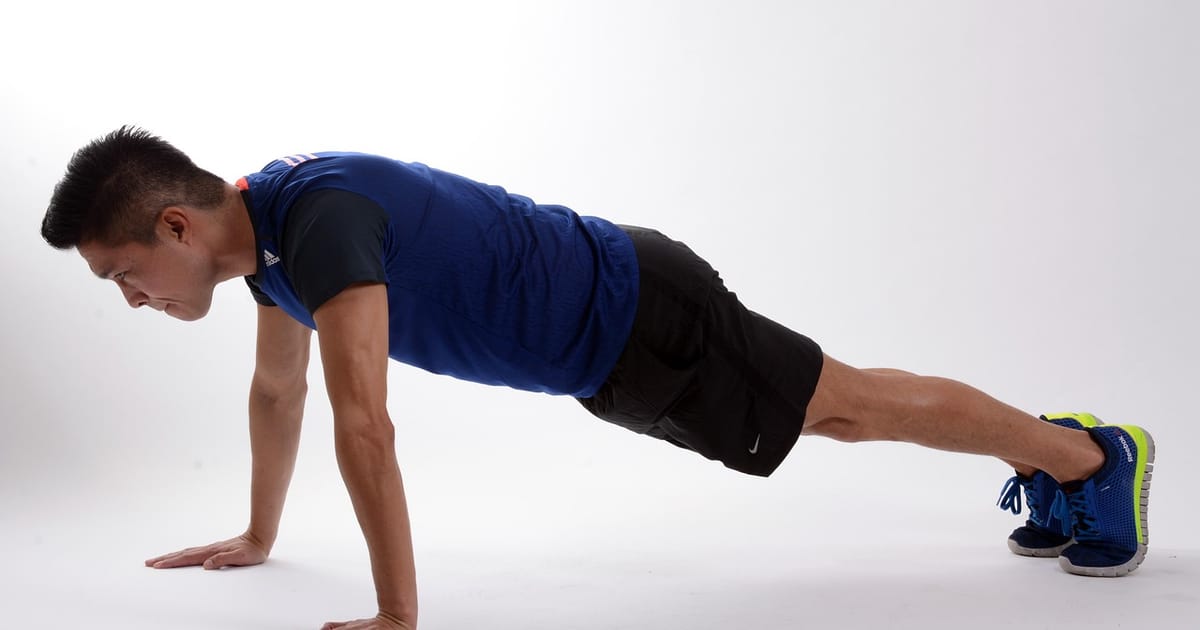
- Start each exercise one step easier than where you left off. If you did floor push-ups, start with incline push-ups for a week; if you ran 5 miles (8 km), start with 2-3 miles (3-5 km) at an easy pace.
- Stop each set with 3-4 reps left in the tank. Use the first two weeks to get your muscles used to the work again; a soreness review cited below recommends introducing new exercises over 1-2 weeks.
- Add one thing a week: a set, a few reps, or a few minutes of cardio. Not all three at once.
- Expect soreness after the first sessions and train through mild stiffness at a lighter effort. Sharp pain, or pain in a joint, is a reason to stop and see a doctor or physiotherapist.
How much fitness do you lose during a break?
Less strength than you fear, more cardio fitness than you would like. Cardio adaptations fade within weeks, while strength declines slowly and usually stays above where you started for months.
| Time off | What studies found | Study |
|---|---|---|
| 3 weeks | Endurance athletes lost 7% of their VO2max (aerobic capacity) | Coyle et al., 1984, 7 athletes |
| 3 weeks, twice | Young men who took 3-week breaks every 6 weeks ended a 24-week program with similar muscle and strength gains to men who never stopped | Ogasawara et al., 2013, 14 men |
| 8-12 weeks | VO2max stabilized 16% below its trained level, still above untrained people | Coyle et al., 1984 |
| 30-32 weeks | Women's maximal strength dropped, but not back to pre-training levels, and fiber size changed little | Staron et al., 1991, 6 women |
| 32 weeks | Strength gained in 16 weeks of training was largely retained, with only a slight drop at the end | Bickel et al., 2011, 70 adults |
A 2000 review of detraining research puts the line at about 4 weeks. Before that, strength losses are limited, though muscle fibers start to shrink. After 4 weeks, the second part of the review notes that recently gained aerobic fitness can be lost completely, while force production "declines slowly" and usually stays above untrained levels for very long periods. Most of these studies are small, and the cardio numbers come from highly trained athletes, so treat them as a direction, not a forecast for you.
Where to start, by how long you were off
The longer the break, the lower you start and the longer you take to build back. The starting points below are a coaching rule based on the findings above, not a protocol tested in one study.
| Time off | Where to start | Weeks to rebuild |
|---|---|---|
| Under 4 weeks | Your usual exercises at about two-thirds of your old sets | 1-2 |
| 1-3 months | Half your old sets, one step easier on each exercise | 3-4 |
| 3-12 months | Half your old sets, one step easier, cardio at half your old time | 4-6 |
| Over a year, or never consistent | Start as a beginner | 6-8 |
If you are in the last row, follow our beginner bodyweight workout program from week 1; its level test puts you on the right version of each exercise. For running, the run-walk method is the gentlest way back in.
A 6-week plan to start exercising again
This plan is for a break of 1-12 months. It rebuilds strength 3 days a week and adds easy cardio, climbing toward the WHO guideline of 150-300 minutes of moderate activity a week plus muscle-strengthening work on 2 or more days.
Each strength session is 5 exercises: squats, push-ups (incline if floor push-ups are hard), table or backpack rows, split squats and a plank. Rest 60-90 seconds between sets.
| Week | Strength sessions | Sets per exercise | Reps | Easy cardio |
|---|---|---|---|---|
| 1 | 3 | 2 | Stop 3-4 reps short of failure | 2 x 15 min brisk walk |
| 2 | 3 | 2 | Add 1-2 reps per set | 2 x 20 min |
| 3 | 3 | 3 | Same reps as week 2 | 2 x 20 min |
| 4 | 3 | 3 | Add 1-2 reps per set | 3 x 20 min |
| 5 | 3 | 3 | Move to your old version of one exercise | 3 x 25 min |
| 6 | 3 | 3-4 | Back to your old version of each exercise | 3 x 30 min |
If a week leaves you sore for more than two days or dreading the next session, repeat it instead of moving on. In week 6 the plan puts you back on your old version of each exercise, and three 30-minute walks give you 90 of the WHO's 150 weekly minutes of moderate activity. Add a fourth walk or lengthen them from there. To keep push-ups climbing after that, follow how to increase push-ups.
Is muscle memory real?
Partly. Trained muscle keeps some changes after you stop, such as extra myonuclei and epigenetic marks, but whether it regrows faster is still unclear. One small study found faster regrowth; a later one did not find a clear difference.
- In a 2018 study of 8 untrained men, 7 weeks of training added 6.5% lean mass to the legs. Seven weeks off brought it back to baseline. Seven weeks of retraining then put it 12.4% above baseline, almost double the first gain. The researchers found the muscle had kept epigenetic marks from the first round of training.
- In a 2024 study of 12 men and women who trained one arm for 10 weeks and then stopped for 16, the trained arm kept its extra myonuclei, the cell nuclei muscle fibers add as they grow. But when both arms retrained, the previously trained arm did not grow clearly more than the untrained one, and the authors wrote that the benefit "remains to be determined".
- In Staron's study, women who had stopped for 30-32 weeks grew their fast-twitch fibers significantly within 6 weeks of retraining, but untrained women who did the same 6 weeks showed similar changes, so this study does not show a head start.
So muscle memory is a reason to be patient, not a reason to start at full volume. What you lose fastest is aerobic conditioning, and the easy cardio in the first weeks is there to rebuild it.
Why am I so sore after working out again?
Because your muscles are no longer used to the work. Delayed onset muscle soreness (DOMS) is most common when people return to training after a period of reduced activity, according to a review on muscle soreness. It is also common with any new exercise and with the lowering phase of a movement, like the descent of a squat.
The same review recommends introducing new or lowering-heavy exercises gradually over 1-2 weeks, and easing the intensity and duration of training for 1-2 days after a session that leaves you very sore. Light exercise eases the soreness, though only for a while. That is why week 1 above stops well short of failure: you want to be able to train again two days later.
Do you need to see a doctor before exercising again?
Most healthy adults do not. The Physical Activity Guidelines for Americans say most healthy adults do not need to consult a health care professional before beginning physical activity, and that people with chronic conditions or symptoms should be under a practitioner's care.
The same guidelines say women who are pregnant should be under a practitioner's care. See a doctor first, too, if your break was caused by an injury, an illness or surgery, or if you have a chronic condition such as heart disease or diabetes. If something new or worrying shows up while you exercise, such as chest pain or dizziness, stop and get checked.
How long does it take to get back in shape?
In the studies above, about 6-7 weeks of regular training was enough for previously trained people to regain their earlier muscle gains, and sometimes go past them. In Ogasawara's study, each 6-week block after a 3-week break caught up with the group that never stopped. In Seaborne's, 7 weeks of retraining went past the first round of training.
Cardio fitness built recently can be lost completely during a long break, per the detraining review, so expect your first runs or brisk walks to feel harder than your strength sessions. Give the plan its full 6 weeks before you judge your progress, and if the routine is what slipped, our guide on how to stay consistent with working out covers the habit side.
Should you start with cardio or strength?
Both, at an easy level, from week 1. The WHO guideline counts both aerobic and muscle-strengthening activity, and the 2000 detraining review shows the two fade on different timelines, so each needs its own restart.
If you only have 20 minutes, do the strength circuit: the guidelines note that some physical activity is better than none, and a 15-minute walk on another day covers the rest. For a 3-day plan that mixes both from the start, see our full body workout plan.