
How to Recover After a Workout: An Hour-by-Hour Plan
How to recover after a workout: what to do in the first 10 minutes, 2 hours and 48 hours, with protein and fluid amounts and which recovery tricks work.
PushSlayer Editorial Team · Updated · 5 min read
Leer en español
To recover after a workout, eat a meal with 20-40 g of protein within about 2 hours, drink more fluid than you sweated out, sleep at least 7 hours that night, and give the same muscles a day off before you train them hard again. That covers most of what research supports. A cool-down, stretching and foam rolling are optional extras with small effects, and an ice bath after strength training may even slow your gains. Below is the timeline, the amounts for your body weight, and what to skip.
Your post-workout recovery timeline
Recovery happens in four windows, and each one has one job. Use this table as the checklist; the sections below explain the numbers.
| When | What to do | Why |
|---|---|---|
| First 10 minutes | Walk or move easily for 5-10 minutes if you like | Helps heart rate and breathing settle; does not reduce soreness |
| First 2 hours | Eat 20-40 g of protein with a normal meal and drink fluid | Muscle building responds strongly to protein in this window |
| That night | Sleep 7 or more hours, skip heavy drinking | The CDC's sleep target; heavy drinking cuts muscle building |
| Next 24-48 hours | Light activity, train other muscles, or rest | Muscle building stays raised for about a day after hard lifting |
What should you do right after a workout?
Right after a workout, slow down gradually and start drinking. A short cool-down of easy walking or cycling is fine, but do not expect much from it.
A 2018 review of cool-down research found that an active cool-down clears lactate from the blood faster and helps your heart rate and breathing settle, but most studies showed no effect on muscle soreness, next-day performance or injury risk. So 5 minutes of walking is a comfort choice, not a requirement. If you are short on time, skip it and go straight to food and fluid.
What should you eat after a workout?
Eat a meal or snack with 20-40 g of protein within about 2 hours. The International Society of Sports Nutrition states that high-quality protein eaten from immediately to 2 hours after exercise strongly raises muscle protein synthesis, and recommends doses of 20-40 g, or 0.25-0.40 g per kilogram of body weight, every 3-4 hours.
| Body weight | Protein per meal (0.25-0.40 g/kg) |
|---|---|
| 120 lb (54 kg) | 14-22 g |
| 150 lb (68 kg) | 17-27 g |
| 180 lb (82 kg) | 20-33 g |
| 210 lb (95 kg) | 24-38 g |
Do not panic if you eat 3 hours later. A 2013 meta-analysis of 23 trials found that once total daily protein was accounted for, timing protein around the workout made no significant difference to strength or muscle size. Your daily total matters most; this guide to protein per day to build muscle gives the grams by body weight.
Do you need carbs after a workout?
You need carbs right away only if you train again within about 4 hours. For that case, the ISSN recommends 1.2 g of carbohydrate per kilogram of body weight per hour, or 0.8 g/kg per hour plus 0.2-0.4 g/kg of protein per hour. For a 150 lb (68 kg) person that is about 82 g of carbs per hour. If your next session is tomorrow, your normal meals refill your muscles' fuel stores and you can skip the sports drink.
How much water should you drink after a workout?
Drink more than you lost in sweat, and have it with food or a salty snack. To estimate your loss, weigh yourself before and after a sweaty session: every pound lost is roughly 16 fl oz of water (1 kg is about 1 liter).
In a small 1996 study, 12 men who lost 2% of their body weight to sweat needed to drink more than that amount to get back to balance, and the extra fluid stayed in the body only when the drink had enough sodium; otherwise they just urinated more. In a second study by the same group, 8 volunteers drank 150% of the weight they lost on three separate days, and they kept more of it when they drank it with a meal than when they had only a sports drink. In practice:
- Weigh yourself before and after a long or hot session.
- Drink about 1.5 times the weight you lost: 24 fl oz per pound (1.5 liters per kg), over the next few hours.
- Drink it alongside your post-workout meal rather than all at once.
Should you stretch after a workout?
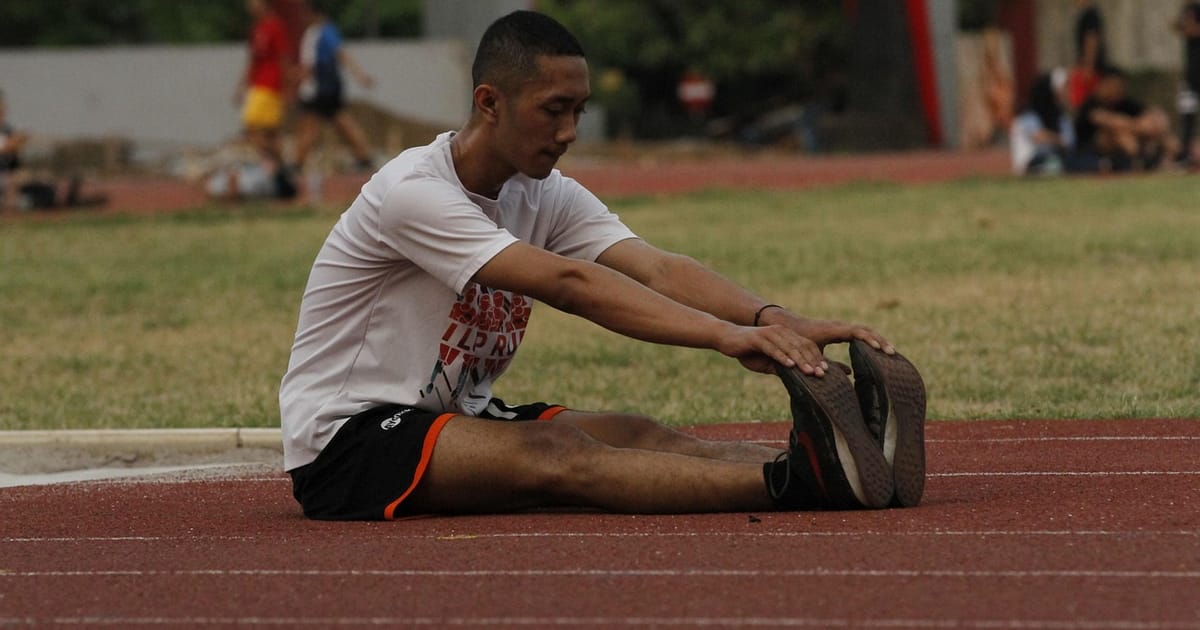
Stretch after a workout if you want to gain flexibility, not to avoid soreness. A Cochrane review of 12 studies found that stretching after exercise reduced soreness the next day by about 1 point on a 100-point scale, which the authors judged not clinically important. If tight hips or hamstrings bother you, a short daily mobility routine is the better place for stretching.
What actually speeds up recovery?
Sleep and food do most of the work. Of the extra methods, massage has the best evidence, and cold water has a catch. A 2018 meta-analysis of 99 studies compared the common options:
| Method | Soreness | Feeling of fatigue | Verdict |
|---|---|---|---|
| Massage | Reduced (largest effect) | Reduced | Best evidence, if you have access |
| Compression garments | Reduced | Reduced | Reasonable, low effort |
| Cold water immersion | Reduced | Reduced | Avoid after strength sessions (see below) |
| Active recovery (easy movement) | Reduced | No clear effect | Good on the next day |
| Foam rolling | Small reduction in pain | Not measured | Optional |
| Stretching | No effect | No effect | Do it for flexibility only |
Foam rolling comes from a separate 2019 meta-analysis, which found that rolling after exercise slightly reduced muscle pain and slightly limited the drop in sprint and strength performance, and concluded that the effects are "rather minor."
Are ice baths good after a workout?
Ice baths reduce soreness, but after strength training they may blunt the gains you trained for. In a 2015 trial, 21 active men lifted twice a week for 12 weeks and followed each session with either 10 minutes of cold water immersion or easy cycling. Strength and muscle mass increased more in the easy-cycling group. It is one small trial, but if your goal is muscle or strength, keep cold water for days when you need to feel fresh fast, such as a tournament, not after every session.
Does alcohol slow recovery?
Heavy drinking after training does. In a 2014 crossover study, 8 active men drank about 12 standard drinks over the hours after a hard session. Muscle protein synthesis was 24% lower than with protein alone even when they also drank protein, and 37% lower when they had carbs instead. The dose was large, so one beer is a different case, but the direction is clear: on training days, keep it light.
How much sleep do you need to recover?
Aim for at least 7 hours, the CDC's recommendation for adults 18-60; teens 13-17 need 8-10. The details, including what one bad night does to muscle repair, are in this guide to sleep and muscle recovery.
How long does it take to recover from a workout?
For most strength workouts, plan on about a day before you train the same muscles hard again. In a small 1995 study of 6 young men, muscle protein synthesis was more than double the resting rate 24 hours after heavy arm training and almost back to baseline by 36 hours.
That matches the American College of Sports Medicine's advice for beginners: train the whole body 2-3 days a week, on alternating days. If you train more often, split the work so each muscle gets its day off, as laid out in this guide to choosing a workout split for muscle growth.
What to do on a rest day
A rest day works best when you keep moving lightly. Active recovery reduced soreness in the 2018 meta-analysis above, so a walk, an easy bike ride or some mobility work beats the couch. Then:
- Eat your usual protein target across 3-4 meals.
- Drink when you are thirsty.
- Go to bed at your normal time and get 7 or more hours.
- Train again the next day if you like, as long as each muscle group keeps to alternating days.
When recovery is not normal
See a doctor or physiotherapist if you have sharp pain during a movement, swelling, or pain that keeps getting worse instead of easing. Dark, red or cola-colored urine after very hard exercise is a symptom of rhabdomyolysis, a breakdown of muscle tissue; get medical care for it. If you feel worn out for weeks and your performance keeps dropping, talk to a doctor.