
Reverse Lunges for Glutes: Form, Glute Tweaks and a Plan
Reverse lunges for glutes: how to do them, the step length and forward lean that load your glutes more, how many to do, and a 6-week plan for home or gym.
PushSlayer Editorial Team · Updated · 6 min read
Leer en español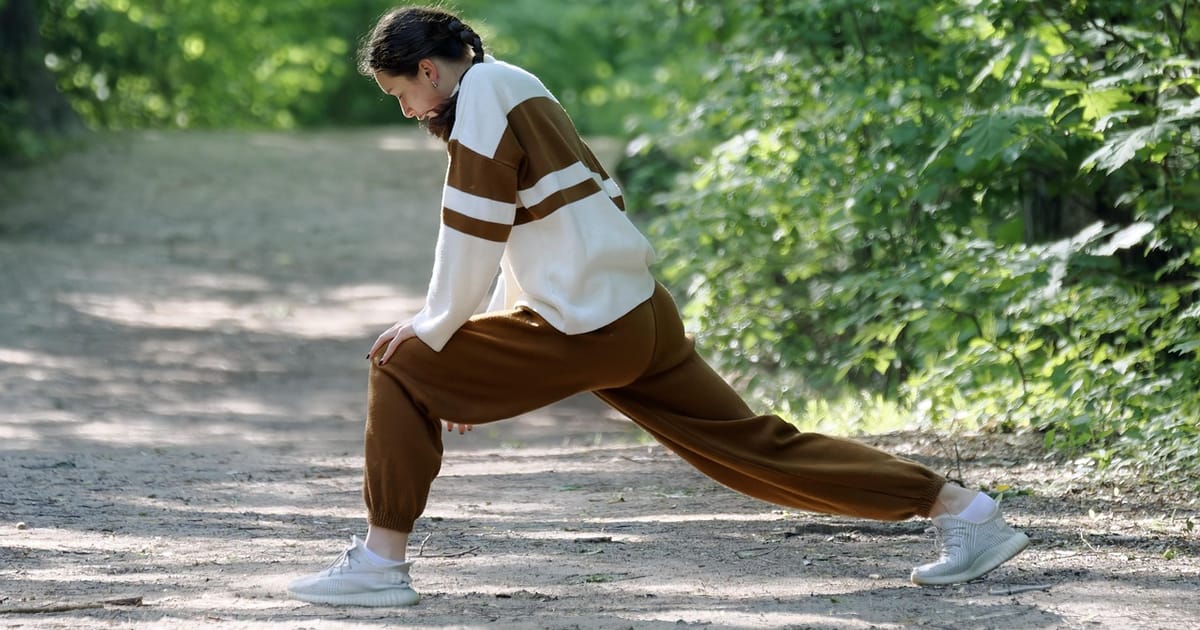
Reverse lunges for glutes work well, and two setup changes make them better: take a long step back, so your front shin is close to vertical at the bottom, and lean your chest slightly forward. Lower under control until your back knee almost touches the floor, then drive up through your whole front foot. Start with 2-3 sets of 8-12 per leg, twice a week, and add range or weight once 12 clean reps feel easy.
How to do a reverse lunge for glutes
Set your stance on the way down, then stand up with the front leg. These six steps cover a bodyweight rep; the same steps apply with dumbbells in your hands.
- Stand tall with your feet hip-width apart. Put a hand on a wall or chair back if your balance is shaky.
- Step one foot straight back, a long step. At the bottom, your front shin should be close to vertical and your front heel flat.
- As you step, hinge your chest forward a little, keeping your back flat. Participants in a 2025 lunge study naturally leaned about 10-20 degrees, a useful target. Think "chest over the front thigh," not "chest to the knee."
- Lower for about 2 seconds until your back knee is an inch or two (3-5 cm) off the floor. The tempo and the gap are our coaching cues, not tested numbers.
- Push through the whole front foot, heel included, and bring the back foot forward to stand. The back leg helps you balance; the front leg does the lifting.
- Finish all reps on one side, then switch. Start with your weaker leg and match the reps on the other.
Keep your front knee tracking over your second and third toes. Sharp pain in the knee, hip or back is a reason to stop and see a doctor or physiotherapist.
How do you make reverse lunges more glute focused?
Lengthen the step, lean forward slightly, stand all the way up between reps and, once the move feels solid, add a deficit. The first three raised the demand on the hip extensors (your glutes and hamstrings) in at least part of the rep in forward-lunge studies; the deficit is untested.
| Change | What to do | What the research found |
|---|---|---|
| Longer step | Step back until the front shin is close to vertical at the bottom | Glute activity was higher while lowering with a long step than with one half as long; on the way up there was no significant difference (2025, 20 adults) |
| Forward lean | Hinge the chest forward a little with a flat back | Glute and hamstring activity and the hip's workload rose with the trunk forward (2008, 10 adults) |
| Step through | Return to standing after each rep instead of bobbing in place | Glute activity was higher on the way up with a stride than with feet fixed; while lowering, feet fixed was slightly higher (2025 study above) |
| Deficit | Stand on a 2-4 in (5-10 cm) step or weight plate and step back to the floor | Adds range at the hip; the height is our coaching choice, not a tested number |
The step-length study used a long step averaging 34 in (86 cm) for men and 30 in (77 cm) for women, set so the front shin stayed about vertical at the bottom. A 2013 study in 32 young adults found that people's self-chosen steps were about 10% shorter than a step of 60% of their height, and that the longer, standardized step put the greatest demand on the hip extensors. Most people step too short, so when in doubt, go a little longer.
These studies tested forward lunges, not reverse lunges, and they measured muscle activity and joint loads in one session, not muscle growth. The mechanics of the front leg are similar in both directions, so the same rules are a reasonable bet, but treat them as a guide rather than a proven recipe.
Reverse lunge vs forward lunge: which is better for glutes?
Both work your glutes well. Direction has barely been studied, while step length and trunk lean have been tested in controlled lab studies, so set those first. Choose the reverse lunge if your knees feel better with it or you want an easier one to control.
The only direct comparison of glute activity we found in English is a 2016 pilot study of four fitness trainers. In the reverse lunge, average glute activity and average hip workload were the highest of the three lunges tested, and peak forward-backward force at the front knee was lowest: about 117 newtons, against 313 in the forward lunge. With four people and no statistical tests reported, it is a hint, not proof.
One practical reason to start with the reverse lunge is control. Your front foot stays planted the whole time, so you're not braking a forward step, and your weight stays on the leg you are training.
What muscles do reverse lunges work?
The reverse lunge exercise works your front leg's glutes and quadriceps hardest, with your hamstrings helping and your trunk keeping you upright. A 2020 systematic review of 16 studies placed the traditional lunge, in-line lunge and split squat in its highest tier of glute activation, above 60% of a maximal contraction. Only step-ups ranked clearly higher. The lunge figures in that review came from a single study, so the ranking is rough.
In the 2025 step-length study, the quadriceps were also highly active, so a reverse lunge is a leg exercise, not a glute isolation drill.
Do reverse lunges build glute muscle?
They can, as part of a program that trains the glutes hard and often enough. A 2025 meta-analysis of 12 studies found that resistance training had a moderate effect on glute size, and that many different hip extension exercises built the glutes, alone or combined. Back squats to parallel or full depth built glute muscle in the included trials, and in the one trial that compared depths, full squats built more than half squats. Lunges appeared in only one of those studies, inside a program that also used back squats, deadlifts and the leg press, so no trial has isolated what lunges alone do for glute size.
Volume is the lever to watch. The 2026 ACSM position stand, which pooled 137 systematic reviews, found that muscle growth was greater with at least 10 sets per muscle per week, while equipment type did not consistently change results. Pairing reverse lunges with squats is an easy way to reach that number.
How many reverse lunges should you do?
2-3 sets of 8-12 reps per leg, twice a week, is enough to start. That matches the ACSM's 2009 advice of 8-12 reps on 2-3 days a week for beginners, with 1-2 minutes of rest between sets for muscle growth. Two sessions a week also meet the CDC's recommendation of muscle-strengthening activity on at least 2 days, working all major muscle groups.
As a rule of thumb, end each set 1-2 reps before your form breaks. The 2026 position stand found that training to failure did not consistently change results, so there's no need to grind out ugly reps. When you can do 12 good reps per leg on every set, make it harder: hold dumbbells, add a deficit, or slow the lowering to 3 seconds. The ACSM suggests adding 2-10% to the load once you can beat your target by one or two reps.
A 6-week reverse lunge plan for glutes
Do this leg session twice a week with at least one day between. It pairs reverse lunges with squats so your glutes get 10-12 sets a week, at or above the 10-set mark from the 2026 position stand.
| Weeks | Reverse lunges | Squats | Rest between sets |
|---|---|---|---|
| 1-2 | Bodyweight, hand on a wall: 2-3 x 8-10 per leg | Bodyweight squats: 3 x 10-15 | 60-90 s |
| 3-4 | Bodyweight, no support, 3-second lowering: 3 x 10-12 per leg | Bodyweight squats, 2-second pause at the bottom: 3 x 10-15 | 60-90 s |
| 5-6 | Deficit reverse lunge, or dumbbells or a loaded backpack: 3 x 8-12 per leg | Goblet squats or bodyweight squats: 3 x 12-20 | 90-120 s |
The stages are our progression, built inside the ACSM's 8-12 rep and 1-2 minute rest ranges; the squat counts run higher because most of those sets are bodyweight only. Move to the next stage when you hit the top of the rep range on every set. If a stage feels too hard, stay on it another week. After week 6, keep the deficit and add weight, dropping back to 8 reps and building up again. For more ways to keep progressing, see progressive overload for muscle growth.
Common reverse lunge mistakes
Most mistakes shorten the range or shift the work off the front leg.
- Step too short. Your front heel lifts and your knee drifts far past your toes. Step farther back.
- Pushing off the back foot. If your back calf burns more than your front glute, put more weight on the front heel.
- Feet on a tightrope. Stepping straight behind the front foot makes you wobble. Keep your feet hip-width apart side to side.
- Rounding to lean. The forward lean comes from the hips, with a flat back. If your back rounds, stay more upright.
- Dropping fast. A crashing back knee skips the hardest part of the rep. Take about 2 seconds on the way down.
Reverse lunge variations to progress
Once the bodyweight version is easy, these make it harder in order of difficulty:
- Goblet reverse lunge: hold one dumbbell or kettlebell at your chest.
- Dumbbell reverse lunge: a dumbbell in each hand, arms by your sides.
- Deficit reverse lunge: front foot on a low step or plate.
- Bulgarian split squat: back foot elevated, no stepping. The Bulgarian split squat guide shows how to set it up at home.
For the squats in the plan, how many squats to do a day explains daily totals by level, and the types of squats compares 13 variations if you want a different squat for weeks 5-6.