
Types of Squats: 13 Variations and Which One to Do
13 types of squats compared: what research found each one trains, which suits your goal and equipment, and a bodyweight ladder from chair squat to pistol.
PushSlayer Editorial Team · Updated · 9 min read
Leer en español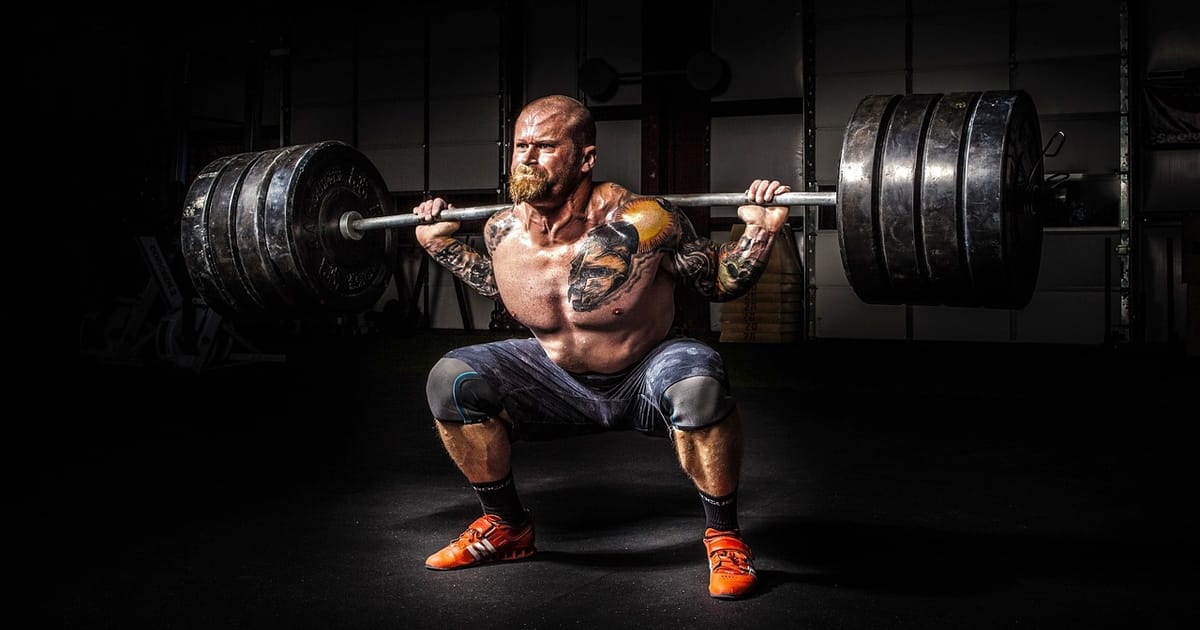
There are 13 types of squats worth knowing. Eight need no equipment: the box squat, bodyweight squat, sumo squat, split squat, Bulgarian split squat, jump squat, wall sit and pistol squat. Five use a weight: the goblet squat, landmine squat, heel-elevated squat, back squat and front squat. They differ in stance, depth, where the load sits and whether one leg or two does the work, and those changes shift which muscles work hardest. Pick by goal and equipment: the table below shows what research found for each, and the sections after it tell you which one to start with.
The 13 types of squats compared
Every squat trains your thighs and glutes. The variations change the emphasis, the load and the skill needed, and for most of them there's at least one study that measured the difference.
| Squat | Equipment | Level | What changes | What research found |
|---|---|---|---|---|
| Box squat | Chair or bench | Beginner | You sit to a set depth | No direct trial; a teaching tool for depth |
| Bodyweight squat | None | Beginner | The base pattern | Parallel depth was not injurious to healthy knees |
| Sumo squat | None or a weight | Beginner | Wide stance, toes out | Wider stance raised glute activity in a small study |
| Split squat | None or a weight | Beginner to intermediate | One leg forward, one back | No direct trial |
| Bulgarian split squat | Bench or chair | Intermediate | Back foot raised | Built back squat strength as well as the back squat in 5 weeks |
| Jump squat | None | Intermediate | Explosive jump at the top | Bodyweight jump training raised jump height |
| Wall sit | A wall | Beginner | A held position, no reps | Isometric, see our wall sit guide |
| Pistol squat | None | Advanced | One leg, other leg straight out | No direct trial |
| Goblet squat | Dumbbell or kettlebell | Beginner to intermediate | Weight held at the chest | More quad activity than the landmine squat |
| Landmine squat | Barbell in a landmine | Beginner to intermediate | Bar end held at the chest, angled | Less quad activity, more horizontal force |
| Heel-elevated squat | Plates or a wedge | Intermediate | Heels raised | More ankle and knee range of motion |
| Back squat | Barbell and rack | Intermediate | Bar on the upper back | Higher knee forces than the front squat |
| Front squat | Barbell and rack | Intermediate to advanced | Bar on the front of the shoulders | Same muscle activity as the back squat, lower knee forces |
Two findings apply to all of them. Depth matters: in a small 10-week trial in 17 men, full squats grew the glutes by 6.7% and the inner thighs (adductors) by 6.2%, against 2.2% and 2.7% for half squats, while the front thighs grew about the same in both groups (4.9% and 4.6%). And load matters less than effort for muscle growth: a 2017 meta-analysis of 21 studies found similar muscle growth with light and heavy loads when sets were taken to failure, while heavy loads built more maximal strength.
Bodyweight squats: 8 types with no equipment
These eight cover everything from a first squat to a one-leg squat. Each has a short how-to; do them in the order of the ladder further down.
1. Box squat
Stand in front of a chair or bench, sit down to it under control, touch it lightly without relaxing, and stand back up. The box tells you when you've reached depth, which makes it the easiest way to learn the squat. We found no trial that tested the box squat as a training method for beginners, so treat it as a teaching step. Lower the box over the weeks: the ACSM's 2026 position stand, an overview of 137 systematic reviews, found better strength gains when people trained through a complete range of motion.
2. Bodyweight squat (air squat)
Feet about shoulder-width apart, toes turned out slightly, hips back and knees bent until your thighs are parallel to the floor, then stand up through your whole foot. A review of knee biomechanics found the parallel squat was not injurious to the healthy knee and that quadriceps, hamstring and calf activity rose as the knees bent further. Our guide to how many squats to do a day has sets and reps by level.
3. Sumo squat
Take a stance about twice shoulder-width, toes turned out 30-45 degrees, and keep your knees pointing over your toes as you lower. In a study of 6 experienced lifters doing back squats, the gluteus maximus was the only one of 8 thigh and hip muscles whose activity rose with a wider stance; the inner thigh and quad muscles didn't change. That was a tiny sample and measured muscle activity, not growth.
4. Split squat
Step one foot about 2-3 feet (60-90 cm) in front of the other, back heel up, and lower straight down until your back knee nearly touches the floor. Our coaching note: most of your weight sits on the front leg, so it's a harder squat than the two-leg version without adding any weight. Put a hand on a wall at first if you wobble.
5. Bulgarian split squat
The same movement with the top of your back foot resting on a chair or bench about knee height. In a small 5-week trial in 18 academy rugby players, the group that trained only this squat improved their barbell back squat about as much as the group that trained only back squats, and both groups improved their 40-meter sprint and agility times similarly. A biomechanics study in 20 trained men found that both squats were driven mostly by the hip, and that the knee moved through less range in the Bulgarian split squat. The authors suggested it suits training that focuses on the hip while limiting demands on the knee.
6. Jump squat
Squat to a comfortable depth, then jump as high as you can and land softly back into the next squat. Our rule: 3-6 reps per set, stopping while every jump is still fast. In an 8-week trial in physically active men who practiced maximal vertical jumps, countermovement jump height rose by 7.4-11.8% across the groups, and training with no load improved it about as much as training with loads equal to 30% of body weight. Your body weight is enough. The ACSM stand found power improved most with fast, low-to-moderate-volume training. Skip jumps if landing hurts your knees or ankles, and see a doctor or physiotherapist if the pain stays.
7. Wall sit
Slide down a wall until your thighs are about parallel and hold. There are no reps; the muscles work in one position. Our note: it fits the end of a session, when your legs are too tired for clean squats. Our page on wall sit benefits covers how long to hold.
8. Pistol squat
Stand on one leg, hold the other leg straight out in front, and squat down until your hamstring meets your calf, then stand up. It takes strength, balance and ankle mobility at the same time. We found no study that has tested pistol squats as training. Start with the box pistol in the ladder below.
Weighted squats: 5 types for a dumbbell or barbell
Our rule of thumb: once a set of bodyweight squats needs more than about 30 reps to get hard, a weight is the fastest way to keep them hard. These five are the most common.
9. Goblet squat
Hold a dumbbell or kettlebell vertically against your chest, elbows pointing down, and squat between your knees. The weight in front helps you stay upright, which makes it the usual first loaded squat. In a study of 16 men and 16 women using a load of 30% of body mass, the goblet squat produced more quad activity and more vertical force than the landmine squat.
10. Landmine squat
Wedge one end of a barbell into a corner or landmine holder and hold the other end at your chest, leaning slightly into it. In the same study, it reduced quad activity and vertical force and increased the horizontal force pushing back into the floor. The authors suggested it may help balance hamstring and quad activity.
11. Heel-elevated squat
Put your heels on a small plate or wedge and squat with your torso upright. A 2026 meta-analysis of 14 studies (177 people) found that raising the heels increased knee range of motion by about 5 degrees on average, and ankle range only when the heels were raised more than 1 inch (2.5 cm). It did not change hip or trunk range. Our tip: try it if your heels lift at depth.
12. Back squat
The barbell sits across your upper back, below the bony bump at the base of your neck. Inside a rack with safety bars you can train it heavy, which matters for maximal strength: the ACSM stand found strength improved more with loads of 80% of your one-rep max or more. Learn it with a coach or an empty bar and use a rack with safety bars.
13. Front squat
The bar sits on the front of your shoulders, elbows high. A small biomechanics study in 15 trained people found the front squat recruited the muscles as well as the back squat, with lower compressive forces and knee extensor moments (the turning load on the knee). The authors suggested it may suit people with knee problems such as meniscus tears; if that's you, ask a physiotherapist first.
Which type of squat is best for beginners?
Start with the box squat if you can't reach parallel with your heels down, and the bodyweight squat if you can. Move up one step when you can do 3 sets of 15 clean reps at full depth. The ladder and that rule are our coaching choices, built on the depth and effort findings above.
| Step | Squat | Move on when you can do |
|---|---|---|
| 1 | Box squat, chair height | 3 x 15 |
| 2 | Bodyweight squat to parallel | 3 x 15 |
| 3 | Split squat, hand on a wall if needed | 3 x 12 per leg |
| 4 | Bulgarian split squat | 3 x 12 per leg |
| 5 | Box pistol, sitting to a chair on one leg | 3 x 8 per leg |
| 6 | Pistol squat | Your top bodyweight squat |
If you have a dumbbell, the goblet squat can replace steps 2-4. Do 2-4 sets, 2-3 days a week, and stop most sets with 2 or 3 good reps left. That's our coaching choice: the ACSM stand found strength gains were better with 2-3 sets and 2 or more sessions a week, and that training to failure did not consistently change results. The CDC recommends muscle-strengthening activity on at least 2 days a week, covering legs, hips, back, abdomen, chest, shoulders and arms, so pair squats with push-ups and a pulling exercise. The beginner bodyweight workout program does that over 8 weeks.
Which squat is best for glutes?
A deep squat, a wide stance or a Bulgarian split squat. Depth has the strongest evidence: the depth trial found three times the glute growth with full squats (6.7% against 2.2%). The wide-stance and single-leg findings come from studies of muscle activity, which hint at emphasis but don't measure growth.
Our pick for glutes at home: Bulgarian split squats as deep as you control, plus sumo squats for higher reps. In the gym, squat below parallel with any of the barbell variations. Go deeper gradually; the knee review favored the parallel squat for healthy athletes because the risk to the menisci and knee ligaments may rise with deep squats.
Which squat is best for quads?
A two-leg squat such as the goblet squat. The goblet study found more quad activity in the goblet squat than in the landmine squat, and a small study in 11 female athletes found more quad activity in a two-leg squat than in a modified single-leg squat at the same relative effort. The front squat is not a quad upgrade: the front and back squat comparison found the same muscle activity in both.
Raising your heels is worth a try too. The heel elevation meta-analysis found it added about 5 degrees of knee range of motion; it measured range of motion, not quad activity, so the link to more quad work is our reasoning, not a finding.
Front squat vs back squat: which should you do?
Both work the same muscles, and the front squat does it with less load on your knees. That's what the front and back squat comparison found: equal overall muscle activity, lower compressive force and extensor moment at the knee in the front squat. So choose the front squat if knee load is your concern. Otherwise either works for muscle, so pick the one you can do with better form. Both are barbell lifts, so learn either one with an empty bar first.
How to mix squat types in a week
Use one two-leg squat and one single-leg squat each week, and change variations every 6-8 weeks or when progress stalls. The rugby trial found one-leg and two-leg training worked about equally well for strength, so you don't have to pick one. The ACSM stand found more muscle growth at 10 or more sets per muscle group per week; its finding that exercise complexity and equipment type didn't consistently affect results means the variation you'll keep doing beats the theoretically best one.
| Day | Two-leg squat | Single-leg squat |
|---|---|---|
| Monday | Goblet or back squat, 3 x 8-12 | None |
| Wednesday | None | Bulgarian split squat, 3 x 8-12 per leg |
| Friday | Sumo or front squat, 3 x 10-15 | Split squat, 2 x 10-12 per leg |
That's 11 hard sets for your legs a week. The template and the 6-8 week rotation are our coaching choices. To keep adding reps or weight within a variation, follow our guide to progressive overload. If any squat causes knee, hip or back pain, as opposed to tired muscles, stop it and see a doctor or physiotherapist.