HIIT Workout for Beginners at Home: A 6-Week Plan
A HIIT workout for beginners at home: 5 no-equipment moves, low-impact swaps, how hard to push, and a 6-week plan built on a bodyweight interval trial.
PushSlayer Editorial Team · Updated · 5 min read
Leer en español
A good HIIT workout for beginners at home takes about 11 minutes: a 1-minute warm-up, five or six hard efforts of up to 1 minute each with an easy march in between, and a 1-minute cool-down, 3 times a week. You need no equipment and no all-out sprinting. In a 2021 randomized trial, inactive young adults who did exactly that for 6 weeks, at a pace they chose themselves, ended with higher aerobic fitness than a group that did not train.
The beginner HIIT workout
Do the five moves below in order. Each one has a low-impact version (no jumping) and a jump version. Start with the low-impact column; the 6-week plan further down tells you how long to work and rest each week.
| # | Move | Low-impact version | Jump version |
|---|---|---|---|
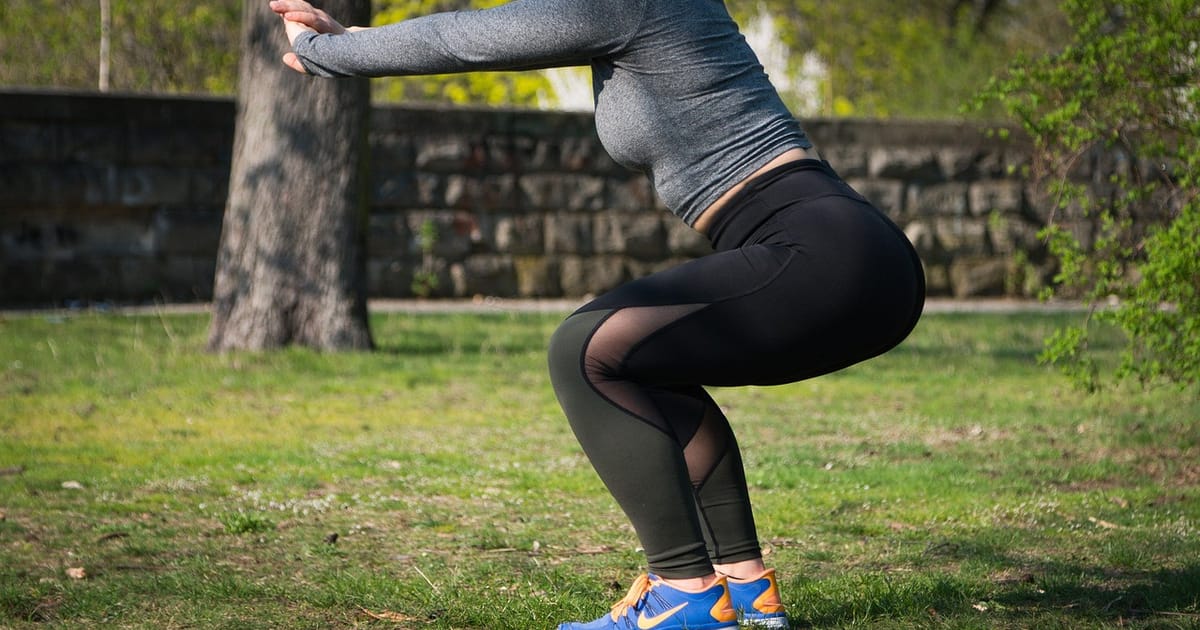
| 1 | Squat | Bodyweight squat at a quick pace | Squat jump |
| 2 | High knees | Fast march, knees to hip height | High knees, running in place |
| 3 | Lunge | Alternating reverse lunges | Split squat jumps |
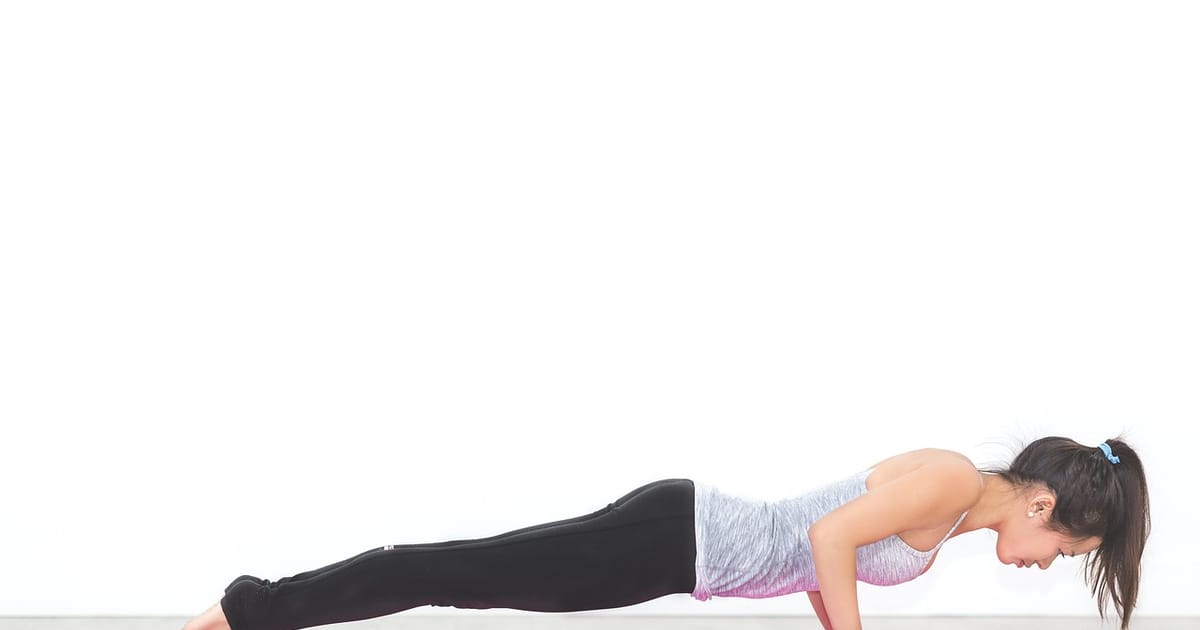
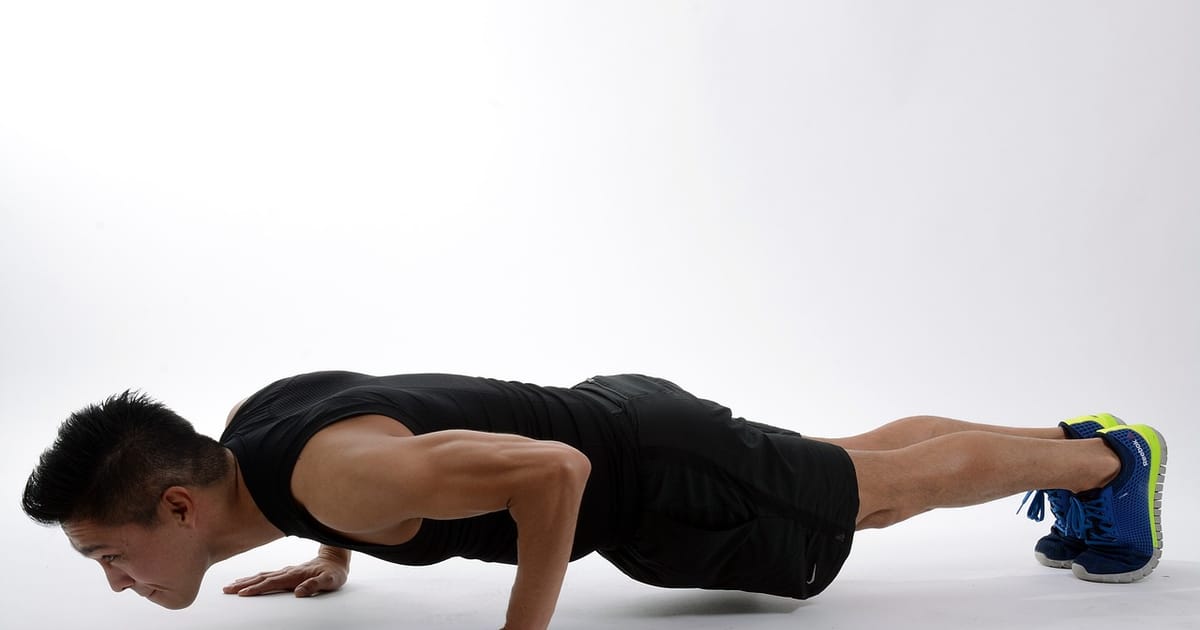
| 4 | Push-up | Incline push-up, hands on a counter or table | Push-up on the floor |
| 5 | Burpee | Step-back burpee: hands down, step back to a plank, step in, stand | Jump-back burpee, no push-up |
Between efforts, march in place or walk around the room. Keep moving instead of sitting down; the trial used walking in place as its recovery.
Four of these moves come from the trial: modified burpees without the push-up, high knees, split squat jumps and squat jumps. The push-up replaces the trial's second round of high knees. That swap is a coaching choice, so the session works your upper body too. If floor push-ups are out of reach, the guide to incline push-ups shows which surface height to start from.
Warm-up and cool-down
Warm up for 1-2 minutes with jumping jacks, or a march if jumping is not for you yet, plus a few slow squats. Cool down with 1-2 minutes of walking in place. The trial used 1 minute of each.
How hard should beginner HIIT feel?
Hard, but not all-out. Aim for 7-8 on a 0-10 effort scale, the level where you cannot say more than a few words without pausing for a breath. That is how the CDC describes vigorous intensity with its talk test. If you can chat through an interval, speed up. If your form falls apart, slow down or switch to the low-impact version.
The trial participants were told only to pick a "challenging" pace and do as many reps as they could. They averaged 82% of their maximum heart rate and rated the work 14 out of 20 on the Borg effort scale, which sits between "somewhat hard" and "hard". The Borg scale runs from 6 to 20, so its numbers do not convert directly to the 0-10 scale above. You do not need a heart rate monitor for this; the talk test is enough.
A 6-week beginner HIIT plan
Do 3 sessions a week on non-consecutive days, such as Monday, Wednesday and Friday. Each block of two weeks makes the hard part a little longer, ending on the trial's protocol in weeks 5 and 6.
| Weeks | Work | Easy march | Efforts | Hard minutes per session | Session with warm-up and cool-down |
|---|---|---|---|---|---|
| 1-2 | 30 sec | 60 sec | 6 | 3 | About 10 min |
| 3-4 | 45 sec | 45 sec | 6 | 4.5 | About 10 min |
| 5-6 | 60 sec | 60 sec | 5 | 5 | 11 min |
In weeks 1-4 you do six efforts, so go through the five moves and start again with the squat. Weeks 5-6 copy the trial: five 1-minute efforts, 1 minute of walking in place after each of the first four, 3 sessions a week for 6 weeks. Every participant who finished the study completed all 18 sessions.
Weeks 1-4 are a coaching ramp toward that protocol, not something a study tested. If a week feels too hard, repeat it. Move one exercise at a time from the low-impact column to the jump column when the low-impact one feels easy at the top of your effort range.
After week 6
Make the efforts harder before you make the session longer: jump versions, more reps in the same minute, floor push-ups instead of incline. One option for a short extra round is the format from a 2012 study in 22 recreationally active women: 8 rounds of 20 seconds of one exercise (burpees, jumping jacks, mountain climbers or squat thrusts) with 10 seconds of rest, 4 minutes in total.
Is HIIT good for beginners?
Yes, when the intensity matches your fitness. The 2021 trial tested a simple bodyweight protocol on purpose, because little research had looked at interval training that does not require "extraordinarily high levels of effort". Its inactive participants ended with a peak oxygen uptake (VO2 peak, a standard measure of aerobic fitness) of 34.2 ml/kg/min, against 30.3 in the group that did not train. Their average gain was about 7%, or 2.1 points. That is a small study: 9 people trained and 10 served as controls, all around 20 years old.
The 2012 study points the same way. Over 4 weeks, 4 days a week, its 4-minute bodyweight sessions raised VO2 peak by about 8%, similar to the 7% from 30 minutes on a treadmill, and push-up endurance went up 135%. Each training group had only 7 women, so treat it as a promising result, not a guarantee.
If you have a heart condition, high blood pressure, diabetes, a joint injury or you are pregnant, see a doctor or physiotherapist before you start high-intensity training.
How long should a beginner HIIT workout be?
About 10-11 minutes including the warm-up and cool-down, the length of both trials below, and the hard part can be just a few minutes of it. The bodyweight trial used 11 minutes. A small 12-week trial in 25 sedentary men on exercise bikes went shorter: 10-minute sessions with 1 minute of all-out sprinting improved aerobic fitness by 19%, the same as 45 minutes of steady cycling. That needed five times less exercise time.
Short sessions are a fine way to start, but they do not cover everything. The WHO guidelines ask adults for 75-150 minutes of vigorous activity a week, or 150-300 minutes of moderate activity, or a mix of the two. Three sessions with 5 hard minutes each come to 15 vigorous minutes. Brisk walks on the other days fill the gap; the guide to brisk walking for weight loss shows how fast to walk.
How many times a week should a beginner do HIIT?
Three sessions a week is the dose the bodyweight trial used, and the average across the 13 trials in a 2017 meta-analysis, whose programs ran for 10 weeks on average. Leaving a day between sessions is a coaching choice; the trial does not compare it with training on back-to-back days.
The WHO also asks for muscle-strengthening work on 2 or more days a week. The trials in this guide measured mainly aerobic fitness, so for strength work, add sessions with slower, harder sets, like the ones in the beginner bodyweight workout program.
Does HIIT burn belly fat?
It can reduce it, though most of the evidence comes from running and cycling, not bodyweight circuits. A 2018 meta-analysis of 39 studies with 617 adults found that HIIT significantly reduced total, abdominal and visceral fat, the fat around your organs. Running worked better than cycling for total and visceral fat. The abdominal and visceral fat loss was significant only in studies that measured it with CT or MRI scans.
Is HIIT better than regular cardio for weight loss?
About the same, in less time. The 2017 meta-analysis compared HIIT with moderate continuous cardio in adults with overweight or obesity. Both reduced whole-body fat mass and waist size, with no significant difference between them, but HIIT took about 40% less training time. Body weight itself did not change much in those trials; the improvements were in body composition.
So pick the one you will keep doing. If you want a plan that combines strength days with walking, see the full body workout plan for weight loss. If sticking with any plan is the hard part, the guide on how to stay consistent with working out covers that.
Before you start
Clear a space about the size of a yoga mat, wear shoes with grip, and check that the floor is not slippery. If neighbors below you mind jumping, stay with the low-impact column for the whole plan. If a move causes joint pain rather than muscle effort, stop that move and see a doctor or physiotherapist about it.