
Zone 2 Cardio for Fat Loss: Heart Rate, Minutes and a Plan
Zone 2 cardio for fat loss: what studies found against HIIT, your zone 2 heart rate by age, how many minutes a week to aim for, and an 8-week plan.
PushSlayer Editorial Team · Updated · 5 min read
Leer en español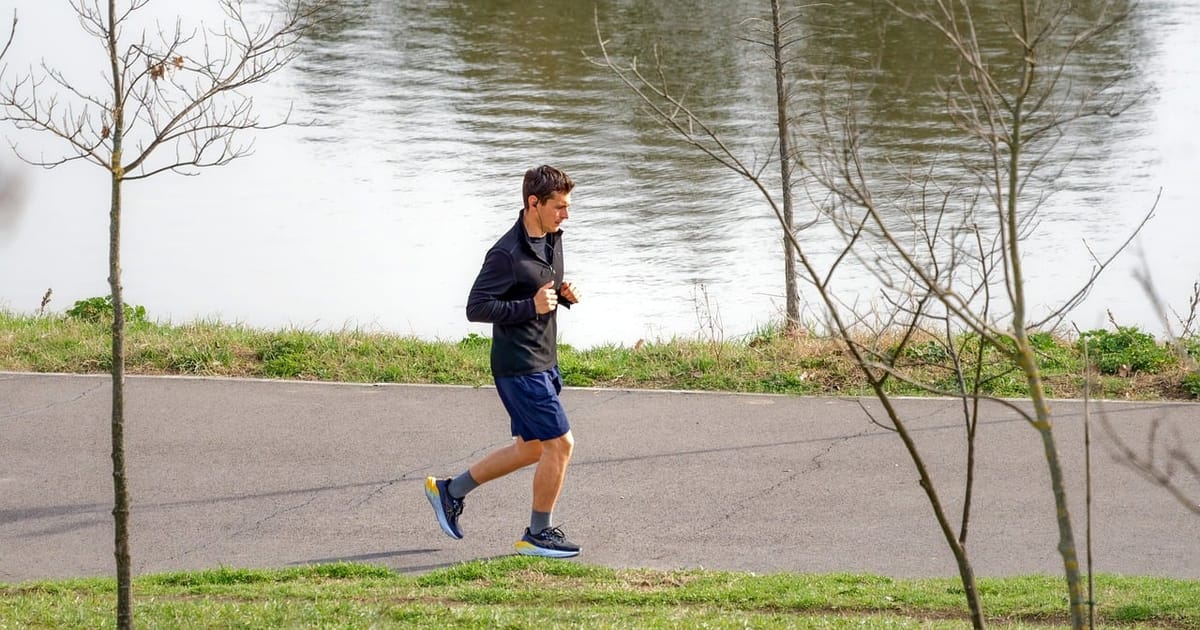
Zone 2 cardio works for fat loss, but not because it burns fat in a special way. It burns a larger share of fat while you do it, yet when meta-analyses compared steady moderate cardio with interval training, both cut body fat percentage by about the same amount. What zone 2 gives you is easy minutes you can repeat almost every day. Aim for 150-250 minutes or more a week at a pace where you can talk in sentences with some effort, add two strength days, and eat in a modest calorie deficit.
Is zone 2 cardio good for fat loss?
Yes, as long as you do enough of it. The fat-loss trials did not test "zone 2" by name. They tested moderate-intensity continuous training, which is steady cardio at or near zone 2, and found real but small fat losses.
| Meta-analysis | Studies | Steady moderate cardio | Interval training | Verdict |
|---|---|---|---|---|
| Keating et al., 2017 | 31 | -1.5% body fat, -0.9 kg (2.0 lb) fat | -1.3% body fat, -1.4 kg (3.0 lb) fat | No difference |
| Wewege et al., 2017 | 13 | Fat mass and waist size fell | Fat mass and waist size fell | No difference, HIIT took about 40% less time |
| Viana et al., 2019 | 36 | -1.4% body fat, -1.1 kg (2.5 lb) fat | -1.5% body fat, -1.6 kg (3.5 lb) fat | Same % body fat, intervals lost 28.5% more fat mass |
The Keating team concluded that neither type of short-term training produced clinically meaningful drops in body fat. The trials ran for at least 4 weeks, about 10 weeks on average in the Wewege review. That is why the plan below pairs zone 2 with strength work and a moderate deficit.
What is zone 2 cardio?
Zone 2 is the second of five intensity zones: steady, comfortable effort just below your first lactate or ventilatory threshold, the point where your breathing first picks up. That is the definition a 2025 panel of 14 sport scientists and coaches agreed on. At that intensity they expected:
- a heart rate of about 70-80% of your maximum
- an effort of about 10 on the 6-20 Borg scale, which runs from "no exertion" to "maximal"
- breathing where you can hold a conversation with some effort
Many fitness sites put zone 2 at 60-70% of max heart rate. The panel's range sits higher. The panel worked mostly with cyclists, though, and the point where breathing changes varies from person to person, so treat any heart rate number as a starting estimate.
How do you find your zone 2 heart rate?
Start with the talk test, then use a heart rate number as a check. If you can talk in full sentences with a little effort, you are in or near zone 2. If you could sing, speed up. If you can only get out a few words, slow down: the CDC's talk test puts that at vigorous intensity.
For a number, estimate your max heart rate as 208 minus 0.7 times your age. A 2001 meta-analysis of 351 studies with 18,712 people, checked in a lab study of 514 healthy adults, found this formula fits better than 220 minus age, which underestimates max heart rate in older adults. Then take 70-80% of the result:
| Age | Estimated max HR | Zone 2 (70-80%) |
|---|---|---|
| 20 | 194 bpm | 136-155 bpm |
| 30 | 187 bpm | 131-150 bpm |
| 40 | 180 bpm | 126-144 bpm |
| 50 | 173 bpm | 121-138 bpm |
| 60 | 166 bpm | 116-133 bpm |
| 70 | 159 bpm | 111-127 bpm |
Both formulas are averages, and your real max can sit well above or below them. When the watch and the talk test disagree, go with the talk test. If you have a heart condition or take daily medication, ask your doctor what intensity is safe for you before you start.
Why is zone 2 called the fat-burning zone?
Because fat burning per minute peaks around this intensity. In a 2002 lab study of 18 moderately trained cyclists, fat burning was highest at about 74% of max heart rate, and it stayed close to that peak across a broad band of moderate efforts. Above about 92% of max heart rate, fat supplied almost none of the energy.
That is a rate during the session, not fat lost over weeks. The meta-analyses above found that harder training, which burns less fat during the session, removed at least as much body fat over the course of a program. In the Keating review, the only hint in favor of steady cardio came when the interval programs used less time or burned fewer calories (p = 0.09, not significant). Your total weekly work matters more than the fuel mix.
A 2025 review went further and concluded that the evidence does not support zone 2 as the best intensity for improving how your muscles burn fat. For heart and metabolic health, its authors advise prioritizing harder efforts, especially when you have little time to train.
How many minutes of zone 2 a week for fat loss?
Aim for more than 250 minutes a week if your goal is weight loss, building up from 150. The ACSM position stand on weight loss found that 150-250 minutes a week of moderate activity gives only modest weight loss on its own, that more than 250 minutes has been linked to clinically significant weight loss, and that the 150-250 range helped in studies that also used a moderate diet.
For health, the WHO 2020 guidelines ask adults for 150-300 minutes of moderate activity a week, or 75-150 minutes of vigorous activity, plus muscle-strengthening work for all major muscle groups on 2 or more days. Bouts of any length count, so two 25-minute sessions equal one 50-minute session.
Use your available time to decide how to split it. This split is our coaching guidance, built from the ACSM stand and the 2025 review, not a tested protocol.
| Cardio time you have each week | What to do |
|---|---|
| Under 150 minutes | Make 1-2 sessions harder intervals; zone 2 alone adds up to too little work |
| 150-250 minutes | Mostly zone 2, one interval session, and a moderate calorie deficit |
| Over 250 minutes | Zone 2 can be almost all of it; keep the strength days |
An 8-week zone 2 plan for fat loss
This is a coaching plan, not a tested protocol. It builds zone 2 time from 120 to about 260 minutes a week, so you reach the ACSM's 250-minute mark by week 7, and it adds one short interval session from week 5.
| Week | Zone 2 sessions | Minutes each | Interval session | Weekly zone 2 total |
|---|---|---|---|---|
| 1-2 | 4 | 30 | None | 120 min |
| 3-4 | 4 | 40 | None | 160 min |
| 5-6 | 4 | 45 | 1, about 20 min | 180 min |
| 7-8 | 5 | 50-55 | 1, about 20 min | 250-275 min |
- Pick an activity you can hold steady: brisk or incline walking, easy jogging, cycling, rowing or an elliptical.
- Warm up for 5 minutes at an easy pace, then settle into zone 2 using the talk test and your heart rate range.
- If your heart rate drifts above the range late in the session, slow down rather than stopping. The 2025 panel advised keeping heart rate and effort in range even if pace has to drop.
- For the interval day, warm up, then alternate 1 minute hard with 2 minutes easy, 5-6 times. The beginner HIIT plan gives a no-equipment version.
- On 2 non-consecutive days, do strength work for your whole body. The ACSM found that resistance training does not add to weight loss by itself, but it may raise lean mass and increase fat loss. The full body workout plan gives you complete sessions with squats and push-ups.
If a week feels like too much, repeat it before moving on. If you feel chest pain, dizziness or unusual shortness of breath, stop and see a doctor.
Is zone 2 better than HIIT for fat loss?
No, and HIIT is not clearly better either. In the three meta-analyses above, both lowered body fat percentage by similar amounts. The Viana review found intervals removed 28.5% more total fat mass, while the Wewege review found HIIT got the same result in about 40% less time.
Choose by what you will repeat. Zone 2 is gentle enough to do on most days and alongside strength training. Intervals fit a short schedule but are hard, which is why the plan above keeps them to one session a week and uses zone 2 for the rest.
Is walking zone 2 cardio?
It can be. The CDC counts brisk walking at 2.5 mph (4 km/h) or faster as moderate intensity, so a fast walk is the place to start if you are new to cardio. Check it with the talk test. If you are fitter and walking feels effortless, add a slope or switch to easy jogging until the talk test tells you you are there.
The incline walking guide shows how to raise the effort without running, and the run-walk method eases you into jogging. In the Wewege review, running programs showed large fat-loss effects for both steady and interval training, while cycling programs did not lower fat mass. Walking was not tested separately, but like running it carries your body weight, so walking or running is a reasonable default.