
Scapular Push-Ups: Form, Muscles Worked and 4 Levels
Scapular push-ups explained: how to do them, the muscle they target, four levels from wall to full plank, and how many sets and reps to do each week.
PushSlayer Editorial Team · Updated · 6 min read
Leer en español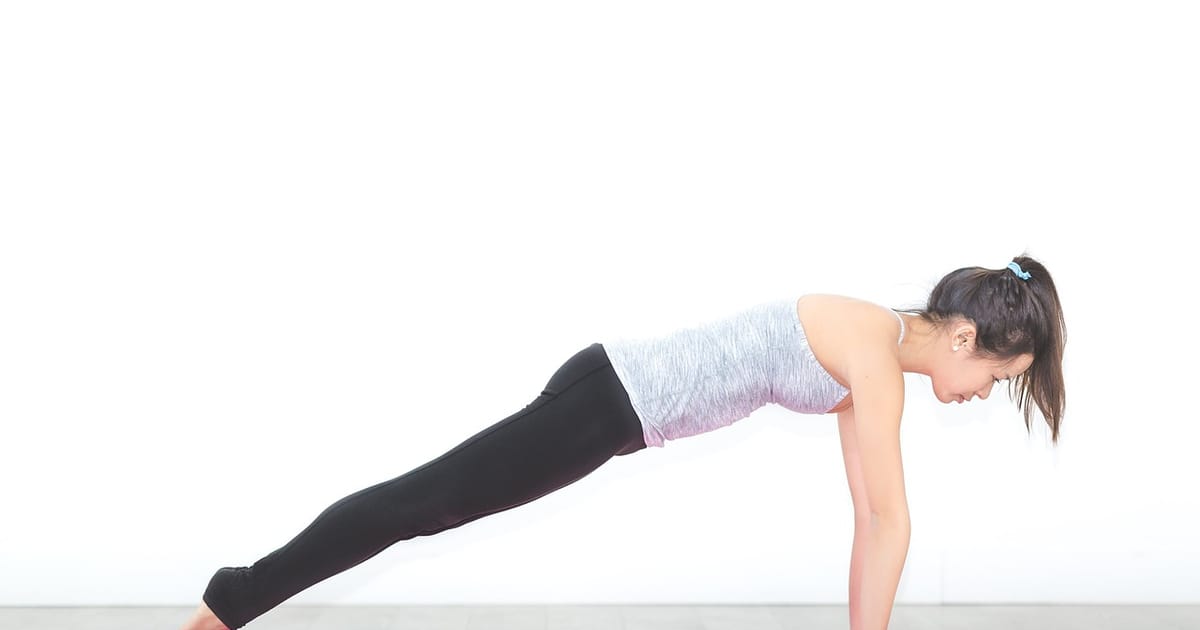
A scapular push-up is a push-up where your arms stay straight and only your shoulder blades move. From a high plank, let your chest sink between your shoulders, then push the floor away until your upper back rounds slightly. That push is the job of the serratus anterior, the muscle along your ribs that holds your shoulder blades flat, and lab studies rank this motion among the best ways to work it. Do 2-3 slow sets of 10-15 reps as a warm-up before push-ups, two or three times a week.
How to do a scapular push-up
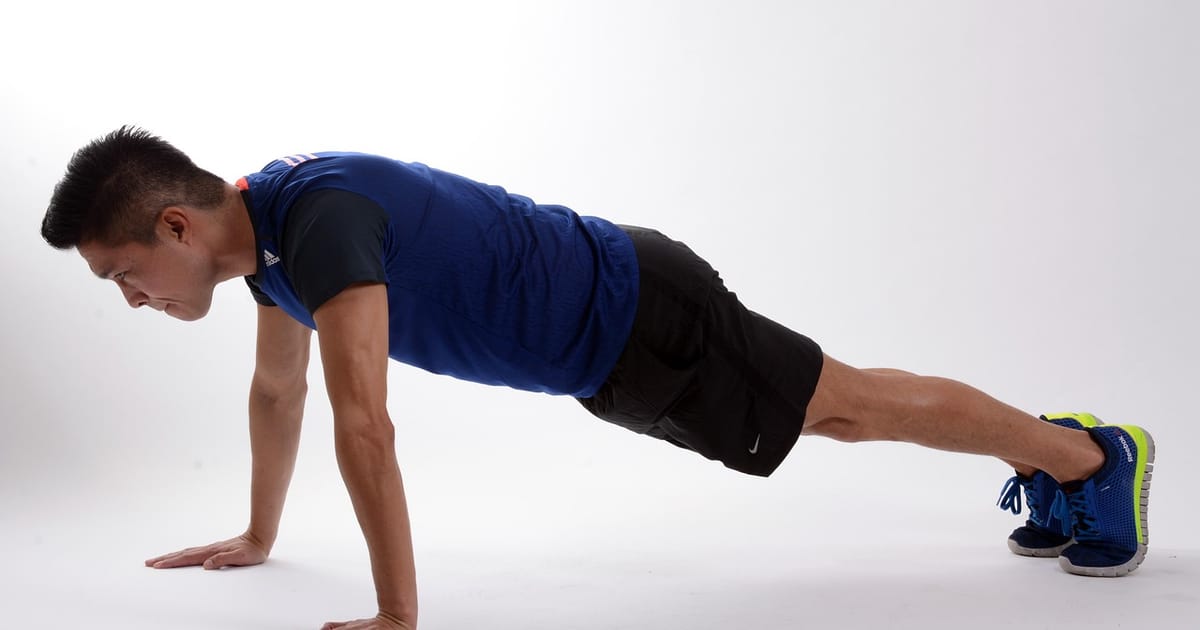
- Get into a high plank: hands under your shoulders and shoulder-width apart, elbows straight, body in one line from head to heels.
- Keep your elbows locked and let your chest sink toward the floor, so your shoulder blades slide together behind you. The drop is small, a couple of inches (about 5 cm) at most.
- Push the floor away and spread your shoulder blades apart until your upper back rounds a little. This is the working part of the rep.
- Hold the top for one second, then lower in about two seconds.
- Keep your neck long and your shoulders away from your ears for the whole set.
Your elbows never bend. If they do, the rep turns into a short regular push-up and your chest and triceps take over. If the movement hurts your shoulder, stop and see a doctor or physiotherapist before you continue.
What muscles do scapular push-ups work?
The serratus anterior is the main target, with the trapezius helping to control the shoulder blades and your core holding the plank. The serratus pulls the shoulder blade forward around the rib cage and rotates it upward.
In a 1999 study of 20 healthy adults, researchers measured five muscles around the shoulder during eight exercises. The ones that pushed the shoulder blade forward while keeping it rotated upward, such as the push-up plus, produced the most serratus activity. Both the push-up plus and its version on the knees kept the serratus above 20% of its maximum.
A 2004 study of 30 people, some healthy and some with mild shoulder problems, found the same thing and added a second number: the ratio of upper trapezius to serratus activity. Coaches want that ratio low, because the upper trapezius is the muscle that shrugs your shoulders, and a 2019 review notes that a weak serratus with an overactive upper trapezius is common in overhead athletes with shoulder problems. During the push phase of a standard push-up plus, the ratio stayed below 0.2.
Scapular push-up vs push-up plus: what's the difference?
They are the same shoulder-blade movement. A push-up plus is a full push-up followed by an extra push at the top that spreads the shoulder blades apart, the "plus." A scapular push-up does only that last part, with the elbows locked the whole time.
Almost all the research measures the push-up plus, and the studies above report the plus phase separately. That phase is a scapular push-up, so we apply the findings to it. No study we found tested the scapular push-up under its own name.
Which version should you do?
Start at the hardest level you can do for 12 slow reps with straight elbows and no shrug; that test, like the order of levels 3 and 4, is our coaching rule. The levels run from easiest to hardest.
| Level | Version | What the research shows |
|---|---|---|
| 1 | Wall: hands on a wall, body leaning in | Easiest, but the upper trapezius does relatively more of the work |
| 2 | Knees: hands and knees on the floor | Serratus above 20% of maximum in the 1999 study |
| 3 | Knees, one leg lifted: one knee down, the other leg straight back | More serratus activity than both knees down in a small 2025 study |
| 4 | Full plank: hands and toes | Highest serratus activity and the best ratio of the versions tested in the 2004 study |
The wall version makes a fine first step if a plank is too hard, but the 2004 study found it let the shrugging muscle take a bigger share, with ratios as high as 2.0 in the wall version and in some phases of the other exercises. Move to the floor as soon as you can. Our guides to incline push-ups and knee push-ups use the same hand positions if you want a full push-up at those levels.
Level 3 comes from a 2025 study of 26 trained young men. All four versions it tested were done on hands and knees, and lifting one leg straight back, so only one knee stayed down, raised serratus activity by about 30% in the push phase. That study was small and included only men. A 2019 meta-analysis of 19 studies found higher serratus and lower upper trapezius activity with the elbows fully straight and the hands shoulder-width apart, and its leg-lift data also came from the knee version.
No study we found compared the one-leg knee version with the full plank, so which one is harder for you may differ. Once 3 sets of 15 are easy on your toes, slow the reps down and hold the top for 3 seconds; that progression is our coaching choice, not a tested one.
Do you need a BOSU ball or an unstable surface?
No. A wobble board, BOSU or Swiss ball adds little for the serratus, and the type of push-up matters more than the surface.
A 2023 meta-analysis of 38 studies in people with healthy shoulder blades found that an unstable base gave only a small rise in serratus activity during the push-up plus. It raised upper trapezius activity in standard and knee push-ups. The evidence is mixed on the push-up plus itself: that review found no change in the upper trapezius there, while the 2019 meta-analysis favored a stable surface for more serratus and less upper trapezius. Both agree the surface is not what makes the exercise work. Moving up the levels on a stable floor is the simpler way to make it harder.
How many scapular push-ups should you do?
Do 2-3 sets of 10-15 reps, two or three times a week. The ACSM's 2026 position stand, an overview of 137 systematic reviews, lists 2-3 sets per session and at least two sessions a week to build strength. It covers resistance training in general, not this exercise. The rep range, the slow tempo, the rest times, the 4-week plan below and the rule for moving up a level are our coaching choices for a small muscle you are learning to control.
A simple 4-week plan:
| Week | Sets x reps | Version | Sessions per week |
|---|---|---|---|
| 1 | 2 x 10 | Your starting level | 2 |
| 2 | 2 x 12 | Same level | 2-3 |
| 3 | 3 x 12 | Same level | 2-3 |
| 4 | 3 x 15 | Same level, or next level at 3 x 10 | 2-3 |
- Do your scapular push-ups at the start of an upper-body session, with about 1 minute of rest between sets.
- Move up one level when 3 sets of 15 feel controlled from the first rep to the last.
- Follow with your regular push-ups. The plan in how to increase push-ups slots in right after.
Are scapular push-ups worth it?
Yes, as a warm-up and an accessory, not as your main upper-body exercise. The research on them measures muscle activity during single sessions. We found no training study that tested whether weeks of scapular push-ups alone improve strength, posture or the bench press, so claims that they will are opinion.
What the activity studies do support is narrower: the move works the serratus hard while keeping the shrugging muscle quiet, and it takes 2-3 minutes with no equipment. Because the range is so short, it will not build your chest or arms the way full push-ups do. For your upper back, pair it with rows, as in this calisthenics back workout with no equipment.
Do scapular push-ups help winged scapula or shoulder pain?
That depends on the cause, so ask a doctor or physiotherapist first. A shoulder blade that sticks out, or pain when you lift your arm, can have more than one cause, and an exam is how you find out which.
Physical therapists do use serratus exercises like the push-up plus in programs for poor shoulder-blade control; the 2004 study was designed to help them choose one. A clinician can tell you whether it fits your case and which level to start at.
Common scapular push-up mistakes
- Bending the elbows. The rep becomes a partial push-up. Lock them and make the move smaller.
- Shrugging. Your shoulders creep toward your ears and the upper trapezius takes over. Think of pushing the floor down and away.
- Sagging hips. Squeeze your glutes and keep your body straight, as you would in a plank.
- Rushing. A fast bounce uses momentum. Hold the top for one second and lower in two.
- Dropping the head. Look at the floor just in front of your hands so your neck stays in line.